 1/14Tap to zoom
Yamaha R3
Yamaha · Motorcycle
R3 Specifications
₹3.60 Lakhex-showroom · last updated 2026
- Engine
- 321cc
- Power
- 41.4bhp
- Weight
- 169kg
01 / Spec Sheet
Yamaha R3 Full Specifications 2026
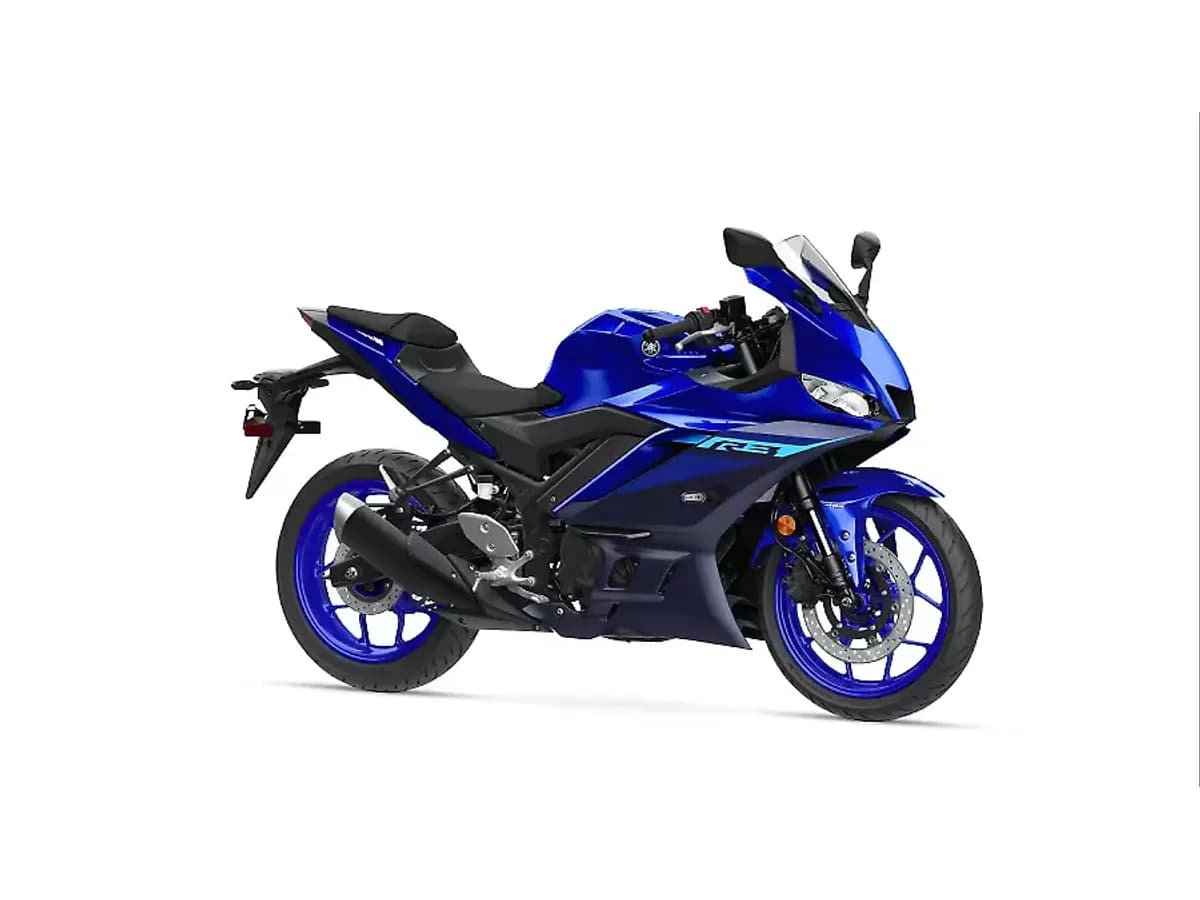
The Yamaha R3 is powered by a 321cc, liquid-cooled, DOHC parallel-twin engine that produces 42 PS at 10,750 rpm and 29.5 Nm of peak torque at 9,000 rpm. Drive goes through a 6-speed gearbox with a chain final drive. The parallel-twin configuration - rare at this price point in India - is the core reason the R3 commands a premium: it is inherently smoother, more refined, and sounds significantly better than the single-cylinder alternatives.
On the chassis side, the R3 uses upside-down (USD) telescopic front forks from KYB - the same supplier used on much more expensive Japanese motorcycles - paired with a mono-cross rear monoshock that offers adjustable preload. Braking is handled by a 298mm front disc with a 2-piston caliper and a 220mm rear disc with a 1-piston caliper, with dual-channel ABS as standard across all variants.
Dimension-wise, the R3 weighs 169 kg at the kerb - lighter than the Kawasaki Ninja 300 (172 kg) and slightly heavier than the KTM RC 390 (166 kg). The 780 mm seat height is accessible for riders of average Indian height, while the 14-litre fuel tank gives a real-world range of around 350-380 km on a full tank at mixed riding. Ground clearance stands at 160 mm - adequate for most Indian road conditions, though speed-breaker scrapes are possible with a pillion.
The instrument cluster is an LCD unit with a gear indicator, speed, rpm, fuel level, and odometer - functional but dated by 2026 standards. The R3 does not get a TFT display, Bluetooth connectivity, a quickshifter, or traction control. Lighting is full-LED including headlamp, tail lamp, and turn indicators. Wheels are 17-inch alloy on both ends with tubeless tyres (110/70-R17 front, 140/70-R17 rear).
The ARAI-claimed fuel efficiency stands at 25 kmpl, though real-world figures from owners range between 22 kmpl in heavy city traffic to 28-30 kmpl on open highways at steady 100-110 kmph.
| Brakes & Wheels | |
|---|---|
| Front Brake | Disc Brakes |
| Rear Brake | Disc Brakes |
| Wheel Type | Alloy Wheels |
| Dimensions | |
| Fuel Tank Capacity | 14 litres |
| Kerb Weight | 169 kg |
| Seat Height | 780 mm |
| Power & Performance | |
| Displacement | 321 cc |
| Emission Standard | BS6 Phase 2 |
| Max Power | 41.4 bhp |
| Mileage - Owner Reported | 29 kmpl |
| Top Speed | 170 kmph |
| Transmission Type | 6 Speed Manual |
Against its direct rivals, the R3's specifications tell an interesting story. The KTM RC 390 (373cc, 43 bhp) out-powers it and packs far more electronics - TFT, traction control, cornering ABS, quickshifter - while being cheaper at Rs 3,23,497. The Kawasaki Ninja 300 (296cc, 38.8 bhp) is older, heavier, and lacks ABS. The TVS Apache RR 310 (312cc, 37.5 bhp) is significantly cheaper and more tech-laden but uses a single-cylinder motor. For riders who prioritise smooth twin-cylinder character and Yamaha's legendary build quality over maximum specs per rupee, the R3's spec sheet makes a compelling case despite the electronics gap.