
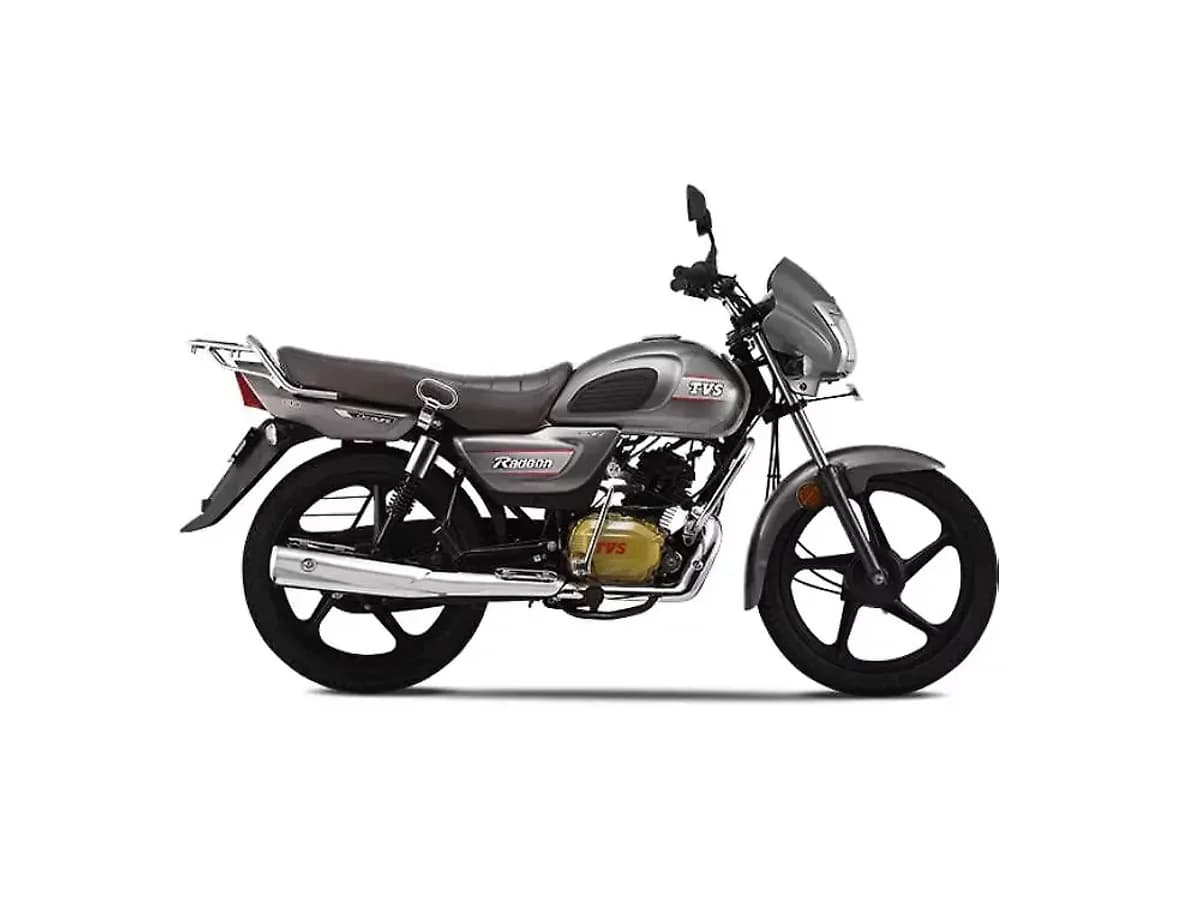
TVS Radeon1/14Tap to zoom

TVS Radeon

TVS · Motorcycle

Radeon

₹ 71,479ex-showroom · last updated 2026

Engine
109.7cc
Power
8.08bhp
Weight
113kg
EMI starting from ₹5,000/month · subject to bank approval
IAF

Research by

IAF Editorial

Updated

TVS Radeon — Overview

The TVS Radeon is a commuter bike available at a price range of Rs. 71,479 - Rs. 80,889 in India. It comes in 4 variants and 8 colours. It is powered by a 109.7 cc BS6 Phase 2 engine and has a user reported mileage of 63 kmpl. With both front and rear drum brakes, the TVS Radeon comes with combined braking system on both wheels. The Radeon bike weighs 113 kg and has a fuel tank capacity of 10 liters. It develops a power output of 8.08 bhp and a torque of 8.7 Nm.

At Rs 57,350, the TVS Radeon undercuts every premium feature-loaded commuter in its class - and yet it packs the longest seat in the 110cc segment, a Duralife engine rated at 73.68 kmpl ARAI, and a digital instrument cluster option that rivals bikes costing Rs 10,000 more. It launched in 2018 and has been quietly refined ever since, adding fuel injection, synchronized braking, and a USB charging port along the way. On paper, TVS is asking a simple question: why buy the Splendor Plus on name alone when the Radeon offers more for less? The answer depends on how much you care about brand heritage vs genuine value - and this page gives you everything you need to decide.

TVS Radeon Latest Updates

View all
  • TVS Radeon recorded 15,330 unit sales in March 2026, marking a 51.89% year-on-year growth - one of the strongest monthly performances in the 110cc commuter segment for the model.

  • TVS Motor Company increased ex-showroom prices of the Radeon by Rs 300 across all variants effective February 3, 2026, citing increased production costs. The Digi Cluster Disc (top variant) now stands at Rs 78,200 ex-showroom.

  • TVS launched the Radeon All Black Base Edition on September 30, 2024 at Rs 59,880 (ex-showroom Delhi), featuring a glossy all-black paint scheme with white badging and a bronze engine cover - the most affordable entry into the Radeon range with a distinct street aesthetic.

What We Like

  • Real-world fuel efficiency of 65-75 kmpl in mixed riding - matches or beats the Splendor Plus in actual use
  • Longest cushion seat in the 110cc segment - makes a difference on 60-80 km daily commutes
  • Tight panel fitment and rattle-free build quality that punches above the price point
  • Digi Cluster variants bring USB charging and a digital console to a budget commuter segment that rarely gets them

What Could Be Better

  • Rear drum braking is genuinely weak - multiple owners flag that stopping distance feels long, especially in wet conditions
  • Only 4-speed gearbox - the engine spins too fast above 80 kmph, making highway overtakes uncomfortable
  • Some owners report a petrol smell when the bike sits parked for two or more days

Editor's Verdict

Should You Buy the TVS Radeon?

The TVS Radeon is the most underrated bike in the 110cc commuter segment. It's more refined, more comfortable, and more feature-rich than you'd expect at its price - especially the Digi Cluster variants. The braking system needs improvement and the 4-speed box isn't built for highways, but for a city-to-work commuter who covers 50-80 km a day, it's a very compelling buy. If you can stretch to Rs 76,650 for the Digi Drum, that's where the Radeon makes its strongest case.

Frequently Asked Questions

QWhat is the price of TVS Radeon in India?
The TVS Radeon is priced from Rs 57,350 (All Black Edition, ex-showroom) to Rs 78,900 (Digi Cluster Disc, ex-showroom). There are four variants in total. Prices were last revised upward by Rs 300 in February 2026.
QWhat is the on-road price of TVS Radeon in Delhi and Mumbai?
The on-road price of the TVS Radeon Base Edition starts at approximately Rs 64,860 in Delhi and Rs 82,873 in Mumbai. The difference is driven by higher road tax slabs in Maharashtra compared to Delhi.
QWhat is the real-world mileage of TVS Radeon?
TVS claims an ARAI-certified mileage of 73.68 kmpl for the Radeon. In real-world mixed city and highway riding, owners consistently report 65-75 kmpl depending on load and riding style. With a 10-litre tank, the practical range is around 650-700 km per fill.
QWhat is the EMI for TVS Radeon base variant?
For the TVS Radeon Base Edition at Rs 64,050, with a 10% down payment (Rs 6,405) and a 36-month loan at approximately 10% p.a., the EMI works out to around Rs 1,850-2,000 per month. Rates vary by lender - TVS offers financing through Bajaj Finserv, HDFC, and nationalised banks.
QWhat is the service cost and service interval for TVS Radeon?
The TVS Radeon requires service every 3,000 km or 3 months, whichever comes first. A routine service (oil change, filter, basic check) at an authorised TVS service centre typically costs Rs 500-800. TVS has a wide service network across tier-1 and tier-2 cities in India.
QDoes TVS Radeon have disc brake?
Yes, but only on the top variant - the Digi Cluster Edition Disc priced at Rs 78,900 (ex-showroom) gets a 240 mm front disc brake. All other variants (All Black, Base, Digi Drum) use 130 mm drum brakes on both wheels, with Synchronized Braking Technology (SBT) across all variants.
QWhich is better - TVS Radeon or Hero Splendor Plus?
The TVS Radeon offers a larger, more comfortable seat, a more modern FI engine, and a digital cluster option - advantages that matter for daily riders. The Hero Splendor Plus has a stronger service network, better brand resale value in smaller towns, and slightly higher user ratings (4.6 vs 4.3). For city commuters who prioritise comfort and features, the Radeon wins on value; for resale and service in rural areas, the Splendor Plus is safer.
QIs TVS Radeon good for long-distance riding?
The TVS Radeon is best suited for daily city commutes of 50-100 km. Its comfortable seat, good mileage, and smooth FI engine handle long rides reasonably well, but the 4-speed gearbox causes engine strain above 80 kmph on highways. For occasional inter-city trips at moderate speeds, it's adequate; for regular NH highway use, the gearbox limitation becomes noticeable.