 1/7Tap to zoom
Ampere Magnus
Ampere · Motorcycle
Magnus
₹ 86,999ex-showroom · last updated 2026
- Weight
- 108kg
Research by
IAF Editorial
Ampere Magnus — Overview
Ampere Magnus is an electric scooter available at a starting price of Rs. 91,991 in India. It comes in 1 variant and 5 colours. The Ampere Magnus comes with both front and rear drum brakes. The Ampere Magnus generates 1.5 W power from its
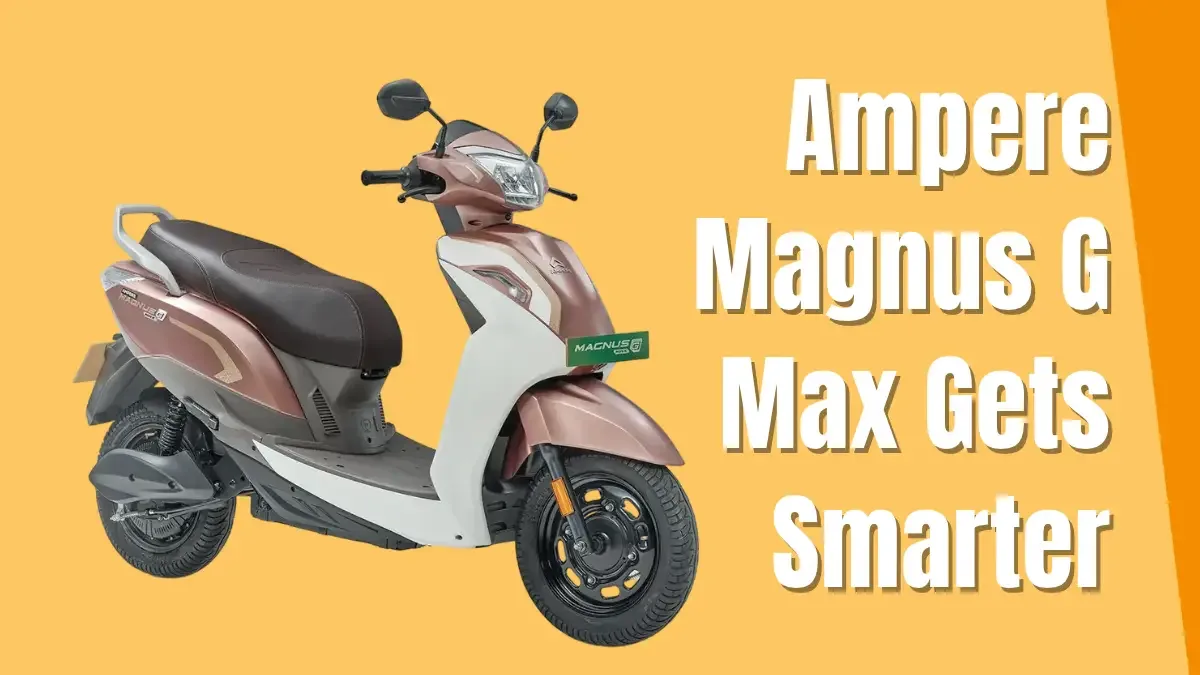
Search for "Ampere Magnus" today and you'll actually find two different scooters, not one. The original Magnus and Magnus EX were discontinued in March 2026, and their direct successor, the Magnus Grand, followed into discontinuation just four months later in July 2026 - despite being marketed as Ampere's "2026 Electric Scooter of the Year." The nameplate lives on today through two current models sold side by side: the Magnus Neo (Rs 90,999) and the Magnus G Max (Rs 1,02,999 to Rs 1,09,999), both built around LFP batteries with a 5-year/75,000 km warranty - among the strongest battery warranties in the Indian electric scooter market. The G Max's IDC-certified 142 km range comfortably beats the pricier TVS iQube's 94 km, and an August 2026 software update added 30-plus connected features to the range-topping G Max NxG.io variant. The catch: both current Magnus scooters use drum brakes at both ends, and real-world range runs meaningfully below the claimed IDC figures.
What We Like
- LFP battery on both Magnus Neo and Magnus G Max - more heat-tolerant through Indian summers and rated for 3,000+ charge cycles versus the 1,000-2,000 typical of the NMC packs used by the TVS iQube and Bajaj Chetak
- Industry-leading 5-year/75,000 km battery warranty - nearly double the 3-year/50,000 km battery cover offered by TVS and Bajaj
- Magnus G Max's 142 km IDC range beats the base TVS iQube's 94 km IDC range by a wide margin, while costing around Rs 17,000 less ex-showroom
- The August 2026 NxG.io software update brought 30+ connected features - cruise control, hill hold, turn-by-turn navigation, live tracking, geofencing, and theft/tow alerts - to the G Max NxG.io variant, closing much of the tech gap with pricier rivals
What Could Be Better
- Both current Magnus models - Neo and G Max - use drum brakes front and rear; there is no disc-brake option anywhere in the current lineup
- Real-world range falls well short of IDC claims: the G Max's 142 km IDC becomes roughly 90-100 km in mixed city riding, and the Neo's 125 km IDC becomes roughly 80-90 km
- The Magnus nameplate has already discontinued two models in 2026 alone (Magnus EX in March, Magnus Grand in July) - a pattern that should make buyers think about resale value and long-term parts support before committing
Editor's Verdict
Should You Buy the Ampere Magnus?
The Ampere Magnus name today is really a two-scooter family rather than one bike, and each half of it earns its price. The Magnus Neo at Rs 90,999 is a competent, no-frills commuter backed by a genuinely strong battery warranty. The Magnus G Max at Rs 1,02,999-1,09,999 is the more interesting buy - its 142 km IDC range and, on the NxG.io variant, a real connected-features suite undercut the TVS iQube by a meaningful margin. The honest caution is Ampere's own track record with this nameplate: two Magnus variants have been discontinued in 2026 alone, so buy for today's price and features, not for a promise of long-term continuity.