- This topic has 0 replies, 1 voice, and was last updated 2 months, 2 weeks ago by
 RoadSage.

- AuthorPosts
- January 26, 2026 at 6:24 pm #2550
 RoadSageKeymaster
Driving in India is more than just handling a vehicle – a responsibility. As the Haryana Police road safety manual explains, driving is a privilege that comes with strict requirements and duties. One of the most important steps toward safer roads is having a proper driver training and effective licensing system. In practice, this means every driver should understand the licensing rules and follow them. Proper licensing ensures that drivers have a basic knowledge of traffic laws and the skills needed to handle vehicles safely. This knowledge is crucial in a country like India, where thousands of road accidents occur each year due to lack of driving skills and rule-breaking. By understanding the licensing process, age limits, and categories of licenses, Indian drivers can help make the roads safer for everyone.
Age Eligibility
Not everyone can just hop on a scooter or drive a car – the law sets minimum ages for different vehicle types. According to the Motor Vehicles Act and the official manual, a person must meet these age criteria to be eligible for a driving license:
- 16 years – for low-powered two-wheelers (motorcycles with engine capacity not exceeding 50cc). (Note: A parent/guardian’s consent is required since the applicant is a minor.)
- 18 years – dash; for any other motor vehicle, which includes motorcycles above 50cc, cars, and other private (non-transport) vehicles. This is the standard minimum age for most personal vehicles in India.
- 20 years – for transport vehicles used for commercial purposes (e.g. trucks, buses, taxis, goods carriers, etc.). Commercial driving demands more maturity and skill, hence the higher age requirement.
It’s important to note that allowing someone underage to drive is a punishable offense. The vehicle owner or person in charge must not permit an underage or unlicensed person to drive. Doing so can lead to up to 3 months of jail or a fine (or both) under Section 180 of the Motor Vehicles Act. In short, meeting the age criteria is the very first step toward obtaining a valid license and contributing to road safety.
Types of Driving Licenses
India’s driving license framework has a few different license types, each serving a specific purpose. The Haryana Police driving manual identifies three main types of licenses issued by the licensing authority:
- Learner/s License: This is a temporary permit for new drivers who are learning. Every new driver must first get a learner’s license for the vehicle class they want to learn. To obtain it, one must pass a preliminary theory test on road rules. The learner’s license is valid for 6 months from the issue date. It allows you to practice driving on the road only when supervised. You must be accompanied by a licensed driver/instructor who can take control if necessary. Also, the vehicle must display red ‘L’ plates at the front and back as a warning to others that a learner is driving. These rules exist to ensure learners gain experience under safe conditions and other motorists are aware of them.
- Driving License (Permanent License): After gaining experience with a learner’s license, drivers can apply for a permanent driving license (sometimes called a “DL”). This license allows you to drive independently. You can apply for a driving license only after 30 days from the date of issue of your learner’s license (and before the learner’s license expires). A driving license is issued only if you pass a practical driving test (more on that later) and is valid throughout India for the specific vehicle category it mentions. For non-transport vehicles (personal vehicles), a new driving license is typically valid up to 20 years or until you turn 50, whichever comes first (after which it needs renewal). For transport (commercial) vehicles, the license has a shorter validity (usually 3 to 5 years) and requires more frequent renewal. The idea is that younger drivers get long validity, but as one ages or if one drives commercially, periodic check-ins (renewals) are needed to ensure fitness and up-to-date knowledge.
- International Driving Permit (IDP): An IDP is a special permit for Indian drivers who wish to drive in foreign countries. It is basically a translation of your Indian driving license into a standard format. The IDP can be issued by the licensing authority in India in addition to your regular driving license. It allows you to drive vehicles abroad (in countries that recognize the IDP) without having to take another driving test. However, you must follow the local driving laws of the country you are in. The International Driving Permit is typically valid for one year from the date of issue, or until your domestic driving license expires – whichever comes first. If you plan to drive overseas on a trip, you would apply for an IDP before traveling. Keep in mind that the IDP is only a permit; you must carry it along with your Indian driving license when driving abroad.
Each of these license types serves as a stepping stone in the journey of a driver. You start with a learner – license to learn and prove your knowledge, graduate to a permanent driving license to independently take on the road, and if needed, obtain an international permit to drive in other countries. Understanding these types helps new drivers follow the correct path and legal requirements as they gain experience.
License Categories (Vehicle Types and Purpose)
Driving licenses in India are categorized not just by the type of license, but also by the class of vehicle and its usage (private or commercial). In other words, a license isn’t one-size-fits-all – it specifically lists what kind of vehicle you are allowed to drive. The official manual outlines several broad vehicle classes for licenses:
- Motorcycle Without Gear (MCWOG): For two-wheelers that do not have gears (typically scooters and mopeds). If you have this license, you can only drive gearless two-wheelers. It does not allow you to ride motorcycles with manual gears, and of course it doesn’t cover any other vehicle. (In India’s license system, there is usually no separate transport/commercial category for two-wheelers – the same two-wheeler license covers personal use, since bikes aren’t generally used as commercial passenger vehicles in the way cars or trucks are.)
- Motorcycle With Gear (MCWG): This category includes all motorcycles and two-wheelers with gears (standard bikes). A person with an MCWG license can ride any type of two-wheeler, whether geared or gearless. However, this is still limited to two-wheeled vehicles (the license holder cannot drive cars or other vehicle types). Like above, there isn’t a separate “transport” endorsement for two-wheeler licenses in practice – the distinction of transport/non-transport mainly applies to four-wheelers and heavier vehicles.
- Light Motor Vehicle (LMV): This is for lightweight four-wheelers and similar vehicles. An LMV license typically covers cars, jeeps, small vans, and light transport vehicles like small goods carriers or tractors (when used for personal agriculture, etc.). Important: Within the LMV category, the license will specify if it’s Non-Transport (NT) or Transport (T). A Non-Transport LMV (also called LMV-NT) is for private/personal use vehicles (like personal cars). A Transport LMV might cover commercial use of light vehicles (like a taxi or light goods pickup). The license holder must use the vehicle according to the purpose endorsed. In essence, if you have only LMV (NT), you can legally drive a car for personal use but not as a paid taxi driver. The manual notes that a Light Motor Vehicle license is “further restricted based on the purpose of use and the type of vehicle” – this refers to the NT/T endorsement.
- Transport Vehicle (Commercial Heavy Vehicles): This category is for heavy vehicles such as trucks, buses, large commercial passenger vehicles, and other vehicles used for hire, reward or carrying goods. Driving these vehicles requires a separate, specific license endorsement. For example, driving a bus or an 18-wheeler truck would require a transport vehicle license of the appropriate class. Because of the size and responsibility of operating such vehicles, the requirements are stricter (including the higher minimum age of 20, as mentioned). Holding an LMV license doesn’t automatically allow you to drive heavy transport vehicles – one must train and get licensed specifically for them.
- Invalid Carriage: This is a special vehicle category for vehicles designed for persons with physical disabilities. They are motor vehicles constructed or adapted for use by a physically challenged person (for example, certain modified three-wheelers or small four-wheelers controlled by hand). A license for an Invalid Carriage permits only that class of vehicle.
- Road Roller: Road rollers (used for road construction) are also considered a separate class. Operating a road roller requires a license for that class of vehicle.
- Motor Vehicle of a Specified Description: This is a catch-all category for specialized vehicles not covered above – such as agricultural harvesters, excavators, cranes, fork-lifts, and other construction or industrial vehicles. If one needs to drive, say, a crane on a public road, the license must specifically allow for a “motor vehicle of specified description,” and examples of such classes are added to the license.
Every driving license will explicitly list the vehicle classes you are allowed to drive. It’s common to have a license with multiple classes (for example, many people have a combined MCWG and LMV license, allowing them to ride motorcycles and drive cars). If you only have one class and later want to drive something in another class, you have to go through the process to add that class to your license (explained below in the “Additions” section). The Transport vs Non-Transport distinction is especially important for four-wheelers and above – if you plan to drive any vehicle commercially (like driving a taxi, bus, or truck for a job), your license needs to reflect a transport category for that vehicle type. Understanding your license categories ensures you drive only the vehicles you are qualified and authorized to, which is both a legal requirement and a safety issue.
How to Get a Learner’s License
Getting a Learner’s License (LL) is the first step for any new driver in India. This permit lets you practice driving under certain conditions before you can apply for a full license. Here’s an overview of the procedure to obtain a learner’s license, based on the official guidelines:
Application and Documents: You must apply to your local licensing authority (usually the Regional Transport Office, RTO, or Sub-Divisional Magistrate in your area) with the required forms and documents. The following documents are required to apply for a learner’s license:
- Application Form (Form 2): Duly filled application form for learner’s license.
- Fee: Payment of the requisite fee for the learner’s license test/issue.
- Proof of Residence: e.g., Aadhar card, voter ID, utility bill, etc., to show you reside in that jurisdiction.
- Proof of Age: e.g., birth certificate, school certificate, passport, etc., to verify you meet the age criteria for the vehicle category (16/18/20 years as applicable).
- Passport-sized Photographs: Typically three recent color photographs.
- Self-Declaration of Medical Fitness (Form 1): A declaration of your physical fitness.
- Medical Certificate (Form 1-A): Required only if you are applying for a transport vehicle learner’s license or if you are over 40 years of age. This must be signed by a doctor to certify you are fit to drive.
- Existing Driving License:If you already hold a driving license for some other category and are now applying for a learner’s of another category (for example, you have a car license and now want a motorcycle learner’s), you might need to produce your current DL. (For first-time license applicants, this doesn’t apply.)
- Parental Consent (if a minor): If the applicant is between 16-18 years old (eligible only for a gearless two-wheeler license), a parent or guardian must give written consent on the form.
Many RTOs now allow online applications for learner’s licenses (through the Ministry of Transport’s Parivahan website), where you fill forms and upload scans of documents. However, you will still need to visit the RTO to take the test.
Preliminary Test: After your documents are verified and the application is accepted, you must take a learner’s license test, which is a theory exam on road rules and signs. The purpose of this test is to ensure you have basic knowledge required for safe driving. According to the manual, the test will assess your understanding of: traffic signs and signals, the “rules of the road” regulations, driver duties in case of an accident, precautions at railway crossings, and documents you should carry while driving. The format is usually multiple-choice questions on a computer. To pass, you typically need to answer 60% or more questions correctly. For example, you might be shown road signs and asked to identify them, or asked what to do if you approach an unmanned railway crossing. This test isn’t very difficult if you’ve gone through the driving manual or basic road safety study materials, but it’s crucial – it ensures every learner knows the fundamentals before actually driving on the road.
If you pass the knowledge test, you will be granted your Learner’s License, usually on the same day. This license will either be given as a printed document or as an endorsement on your Sarathi (online) account, depending on the state’s system. The learner’s license is valid for 6 months and can be used to practice driving on public roads.
Learner’s License Rules: During the learner’s phase, the law has special restrictions for safety:
– You must display the ‘L’ sign on your vehicle. This is a red letter ‘L’ on a white background. It needs to be clearly visible from front and back. (The manual even specifies that the ‘L’ should be at least 10 cm tall and 2 cm thick, to give you an idea of visibility). This sign warns other drivers that you are a learner – they may be more patient or cautious around you, which is helpful.
– You must have a licensed driver with you when driving. If it’s a motorcycle, only the instructor (who must have a valid license for that class) can be your pillion. For a car, the accompanying driver should sit in the front passenger seat, ready to take control if needed. This experienced driver is there to guide you, correct mistakes, and handle emergencies. Driving alone with only a learner’s license is not permitted and can lead to penalties.
– You cannot carry other passengers (besides your instructor) on a two-wheeler, and you should avoid driving on expressways or other high-speed roads as a learner. Learners are also typically not allowed to drive after dark in some jurisdictions, though this may vary.Following these rules is important not just legally but for your safety. The learner period is your time to practice and build confidence. After a minimum of 30 days (and within 6 months) of holding the learner’s license, you become eligible to take the driving test for a permanent license.
How to Get a Driving License
After practicing with a learner’s license and once you feel confident in your driving skills, you can apply for a Driving License (DL) – the full license that allows unsupervised driving. Here’s what the process entails:
Eligibility and Waiting Period: You can apply for a driving license 30 days after your learner’s license issue date (this grace period is to ensure you have spent some time learning). You must apply before the learner’s license expires (within 6 months), otherwise you’d need to get a new learner’s license. It’s generally recommended to utilize the learner period to practice thoroughly, then schedule your driving test around the 30-90 day mark when you’re ready.
Documents Required: To apply for the driving license, you will submit an application to the RTO. The documents needed are similar to before, with a few additions:
- Application Form (Form 4): Duly filled application for driving license.
- Learner’s License: Your valid learner’s license for the category of vehicle. This proves you’ve completed the learner stage and are eligible to test.
- Required Fee: Payment for the driving test and license issuance fee.
- Photographs: Passport-sized photos (though in many places, your photo is captured electronically at the RTO during the test, so check local practice).
- Self-Declaration of Medical Fitness (Form 1) and Medical Certificate (Form 1-A): If you are below 40 and going for a non-transport license, usually the self-declaration is enough. For commercial licenses or if age > 40, a doctor’s medical certificate is required (to ensure you are physically fit to drive).
- Proof of Residence & Age: Again, you might need to show proof of address and age if required (often the learner’s license itself is accepted as proof since you submitted those for it).
- Driving School Certificate (Form 5):If you are applying for a transport (commercial) vehicle license, you need a certificate from an authorized driving training school. This is mandatory for commercial license applicants under Indian law – it certifies that you have undergone proper training for say, a truck or a passenger bus, which is more extensive than learning a private car. For private licenses (like car or bike), this Form 5 is not required (optional if you took training, but not mandatory).
Once your documents and forms are in order, the RTO will schedule a driving test for you.
Driving Test: The driving test is the practical exam where you demonstrate your driving ability. It is conducted by an Inspector of Motor Vehicles (IMV) or Motor Vehicle Inspector at the RTO test track (or on the road, in some cases). According to the manual, the test is carried out in a vehicle of the same type for which you’re seeking the license. So if you applied for a car license, you will take the test in a car; for a bike, you’ll ride a bike, and so on.
During the test, the examiner will check that you can perform various driving maneuvers and follow rules correctly. Some key aspects you will be tested on (as outlined in the road safety manual) include:
- Pre-Drive Checks: Adjusting mirrors, fastening seatbelt, checking that doors are closed, etc., before starting the engine. This shows you’re mindful of safety from the start.
- Moving Off and Gear Use: Smoothly moving the vehicle forward, using the correct gear and speed for conditions. No stalling or jerky starts, and not over-revving the engine.
- Traffic Sense: Properly observing traffic rules such as using indicators (turn signals or hand signals) clearly in advance, obeying traffic lights and signs, yielding to pedestrians, and following lane discipline. For instance, you must stop at stop lines, not jump signals, and give way to people on zebra crossings.
- Turns and Lane Changes: Making left and right turns correctly – slow down, use mirror, signal, take the turn without cutting across lanes sharply. When changing lanes or overtaking, use mirrors and signals and do so cautiously.
- Stopping and Parking: Bringing the vehicle to a controlled stop. If on a slope/hill, use handbrake and proper technique so the vehicle doesn’t roll back. You might be asked to park the vehicle or stop/start on an incline if a test facility allows.
- Reversing: For cars and heavier vehicles, you may need to demonstrate reversing straight and into a corner or garage bay. The test often includes reversing the vehicle and parking it within a designated space, to show you have control in reverse gear.
- General Control: The examiner watches that you have control over the vehicle at all times – both hands on the wheel (for cars) except when changing gears, smooth steering without over-correction, proper use of accelerator and brake without stalling or lurching. They also observe your attitude – e.g., you stay calm, not panic, and you’re courteous to other road users.
If the test has a dedicated track, you might have specific tasks like a figure-of-8 or serpentine track for two-wheelers (to test balance and turning), or parallel parking and three-point turn for four-wheelers. Each RTO may have a slightly different testing pattern, but all the above points are generally evaluated.
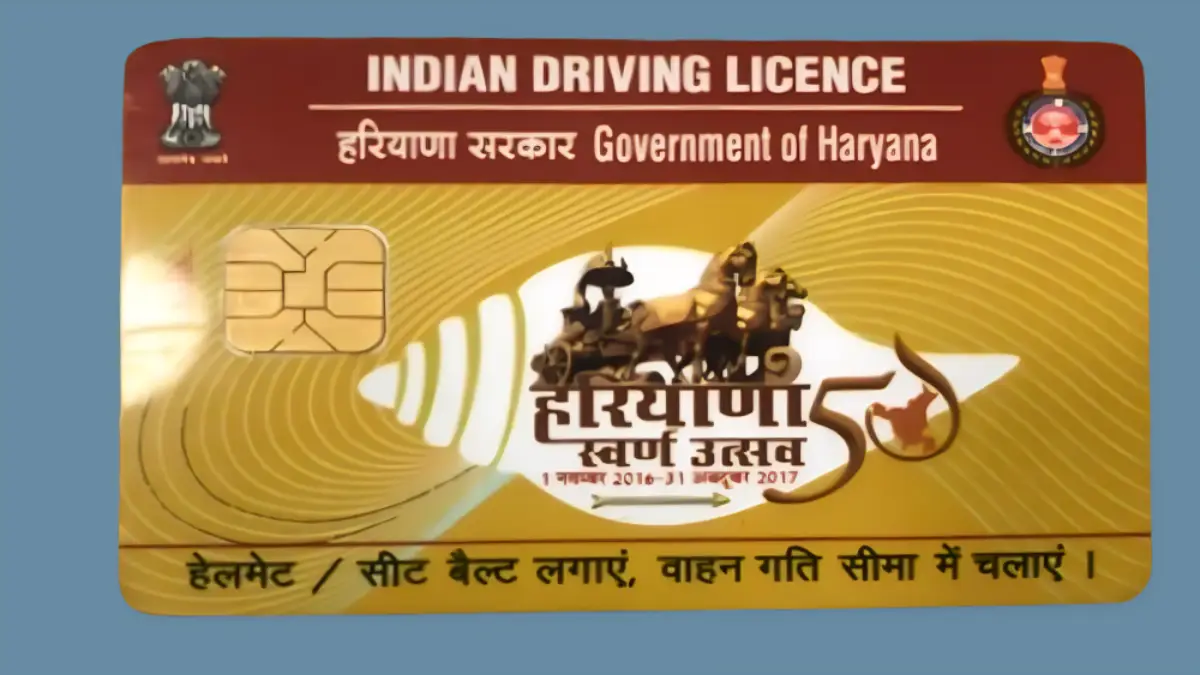
Result of the Test: If you pass the driving test, the officer will approve your application. You will then get your driving license – nowadays it’s usually a Smart Card or printed license card mailed to your address, or handed the same day in some offices. The license will mention the class of vehicle and is your proof of driving qualification.
If you fail the test, don’t worry – you can reattempt. As per rules, if you fail, you can apply for a re-test after 7 days. This waiting period gives you time to practice more on the areas you lacked. However, if you fail repeatedly, there is a limit: after three failed attempts, you have to wait 60 days (two months) before trying again. This is to encourage applicants to seriously practice and improve before coming back, rather than attempting over and over in a short span. In any case, you won’t need to pay the full fee again for re-tests in many states – just a nominal fee or no fee for a limited number of re-tests (policies vary).
Exemptions: There are a few cases where the driving test might be waived. For example, if you already held a driving license in the past and it expired recently, you might not have to re-test for renewal. The manual notes that if an applicant has held a license of the same class that expired within the last 5 years, they can be exempted from the test. Similarly, holding a driving license from the central government (like if you were in the military) or a valid foreign license might exempt you. Also, completing training at a state-recognized driving school can sometimes exempt you (though for non-commercial licenses this is not common). These cases are not typical for new drivers, but good to know.
Once you pass and get your driving license, remember that it is usually valid for a long period (as mentioned earlier) but must be renewed eventually. Also, different vehicle classes can be added later, but you cannot drive those additional vehicles until you formally add them to your license. Overall, earning your driving license is a milestone – it certifies that you have the knowledge and skill to drive on your own. But it also comes with the expectation that you will drive responsibly and follow all the rules you’ve learned.
Applying for an International Driving Permit
If you already have a valid Indian driving license and you plan to drive in another country, you can apply for an International Driving Permit (IDP). The IDP is essentially a document that translates your Indian license details into multiple languages (as per a UN convention format), and is recognized in many countries. It’s important to note that an IDP is not a standalone license – it’s used together with your original driving license.
Here’s how to get an International Driving Permit in India, according to the official guidelines:
Eligibility: You must hold a valid Indian driving license to be eligible for an IDP. The IDP will only be issued for the categories of vehicles that your domestic license permits. Also, an IDP is typically only issued to Indian citizens (as your passport and visa are required).
Application Process: You apply for an IDP at the same RTO that issued your driving license (or in some states, any RTO). Some states have an online application process for IDP as well. The documents required are:
- Application Form (Form 4-A): This is the specific form for IDP applications.
- Valid Driving License: You need to show your original driving license (and submit a photocopy). The license must be valid; if it’s expiring soon, you may need to renew it first. The IDP validity cannot exceed your license’s validity.
- Fees: The fee for an IDP issuance, as prescribed (it may be a few hundred rupees).
- Photographs: Passport-size photos (usually 3) for the permit document.
- Medical Certificate (Form 1-A): A medical fitness certificate may be required for IDP (the manual lists it as needed). This is to ensure you are physically fit to drive abroad.
- Valid Passport: You must provide your passport, as the IDP is essentially linked to international travel. They will likely ask for a copy of your passport.
- Valid Visa: If you are going to a country that requires a visa, you should have the visa (or travel ticket/plan) as proof. The IDP is usually issued for the country you intend to visit or a general permit for all signatory countries, but some RTOs ask for visa as proof of travel plans.
When you submit these, the RTO will process your application. Unlike the regular license, no additional driving test is needed for an IDP (since you already have a license). The permit is typically issued in the form of a booklet or a card – it will have your photograph and driving license information in multiple languages (English, French, Spanish, etc.), and it will state which vehicle classes you are allowed to drive (based on your Indian DL).
Validity: As mentioned, an IDP issued in India is valid for one year or until your Indian license expires, whichever is earlier. After it expires, if you are still abroad and need to drive, you would have to apply for a new IDP (which might require coming back to India, as IDP is generally only issued in the home country).
Usage: If you have an IDP, and for example you go to a country like the USA or France, you can rent a car or drive a vehicle there legally (for a limited period as per that country’s laws) without taking a local driving test. Always carry both your IDP and your original driving license when driving abroad. The IDP is just a translated permit; your actual license is the proof of your driving qualification. Also, remember that IDP or not, you must obey the driving rules of the country you are in (speed limits, road signs, etc. which may differ from India). The IDP does not exempt you from local laws; it’s only an authorization document. If a country is not party to the international driving permit treaty or has no agreement with India, an IDP might not be valid there.
In summary, the International Driving Permit is a convenient document for Indian travelers. To get it, ensure you have an updated Indian license and all required documents. It’s a straightforward process and can be done a few days before your travel. This permit makes it much easier to legally get behind the wheel in foreign countries for short durations (like tourists or temporary residents).
Adding Vehicle Classes to Your License
Suppose you initially got your driving license for a car, but now you want to ride a motorcycle, or you have a motorcycle license and now need to drive a car – in such cases, you don’t get an entirely new license from scratch; instead, you add another class of vehicle to your existing driving license. This is often called an endorsement or addition of category.
The process for adding a new vehicle class to your license is somewhat a mix of the steps for getting a learner’s and driving license:
- Obtain a Learner’s License for the New Category: First, you will need to apply for a learner’s license for the category you want to add. For example, if you have an LMV (car) license and now want an MCWG (motorcycle) endorsement, you must get a learner’s license for motorcycle. The process and documents for that will be the same as outlined in the learner’s section (forms, fees, etc., and passing the learner’s test for that category). This ensures you learn and practice that type of vehicle, because driving a car is a very different skill from riding a two-wheeler.
- Apply for Addition with Required Documents: When you are ready to take the driving test for the new category, you submit an application to add the class to your existing DL. As per the manual, you should submit the following:
- Application Form (Form 8): This is the specific form to apply for adding a category to your license.
- Fee: The required fee for the test and license endorsement.
- Learner’s License for the new class: You need to have a valid learner’s licence (or driving license) for the category you wish to add. Essentially, you prove you’ve gone through the learning stage for that vehicle. (If you already oddly had a separate driving license for that class from before, you could use that, but typically it’s a learner’s license you got in step 1.)
- Driving Certificate (Form 5): If you are adding a transport vehicle category, you will need the driving training school certificate as mentioned before. (For example, you have a private car license and now want a commercial truck license – you’ll need the Form 5 from training school.)
- Driving Test for the New Category: Just like your first driving test, you will have to pass a test for the new vehicle class. The rules for the test are the same – you’ll be tested on your ability to control that vehicle and follow rules. Once you pass, the new class will be endorsed on your existing license. You don’t get a separate license; instead, your single driving license card will list multiple categories (e.g., MCWG and LMV).
The manual emphasizes that all the provisions for getting a new license apply similarly to adding a class. That means you must meet the age requirement for that vehicle, pass the required tests, etc. For instance, if a person has a motorcycle license and at age 19 wants to add a transport LMV (which requires age 20), they would not be allowed until they turn 20. Or if someone with a private car license wants to add a heavy passenger vehicle, they need to fulfill any prerequisites for that (like maybe having LMV for one year, depending on state rules, plus the training certificate).
In practice, adding a common category (like adding a bike to a car license or vice versa) is straightforward: get the learner’s permit, practice, then take the test. Adding heavier vehicle classes often requires more preparation. But the benefit of additions is that you maintain one single driving license document with multiple permissions, rather than juggling separate licenses.
Always ensure after the process that your new license (or the renewed one with the added class) correctly shows all the vehicle classes you are entitled to drive. This way, you won’t face any legal issues if checked by traffic police – the license must cover the vehicle you are operating.
Renewing Your License
Driving licenses are not valid forever; they come with an expiration date. It’s crucial to renew your license on time to remain legally allowed to drive. Here’s what you need to know about renewing a driving license in India:
Validity Period: For a private (non-transport) driving license, the usual validity is 20 years from the issue date or until you reach 40 years of age, whichever is earlier (for newer licenses, it may be up to age 50 as per recent rules, and then 10-year or 5-year renewals thereafter). Many licenses issued in young adulthood will have an expiry on the holder’s 40th or 50th birthday. For a commercial/transport vehicle license, the validity is typically 3 or 5 years (the manual indicates 3 years for transport, and 1 year if it involves hazardous goods). Always check the expiry date on your license.
When to Renew: You can apply for renewal within 30 days before or after the expiry date without much hassle. The law provides a grace period of 30 days after expiry during which you can renew without any late fine, and the renewed license will still retain continuity (it will be renewed from the original expiry date). However, if you renew after 30 days of expiry, the new validity will count from the date of renewal (meaning if you were 6 months late, those 6 months are lost and not added to the license). More importantly, driving with an expired license is illegal, so it’s best not to wait beyond expiry at all.
If you let your license expire for a very long time, specifically over 5 years, then it becomes invalid for renewal. After 5 years of lapse, you would have to start over by taking a driving test again to get a license. The manual clearly states that if the renewal application is made more than five years after the license has ceased to be effective, the applicant is required to pass a competency test again. Essentially, after 5 years of not being renewed, your license is treated as void.
Where to Renew: You should apply to the licensing authority of the area where you ordinarily reside or work. In practical terms, that means your local RTO. These days, many RTOs accept online renewal applications through the Parivahan website. If you have moved cities, you can still renew at the new location’s RTO – you might need to get your details transferred or provide a No Objection Certificate from the original RTO (if in a different state).
Documents Required for Renewal: According to the driving manual, you need to submit the following for a DL renewal:
- Application Form (Form 9): This is the renewal form, filled out with your current details.
- Fee: The renewal fee as prescribed. If you are late beyond the grace period, additional late fee may apply per delayed year.
- Photographs: Three recent passport-sized photos (if the RTO system doesn’t already have your updated photo).
- Your Old Driving License: The current or last held driving license needs to be submitted. They will stamp “renewed” on it or keep it and issue a new card. If it’s lost, you’d have to first apply for a duplicate (see next section).
- Medical Fitness forms:Form 1 (Self-Declaration) is required for everyone. Form 1-A (Medical Certificate) is required if you are above a certain age or for certain categories. Specifically, for a transport vehicle license renewal or if you are over 40 years old, a doctor must certify you fit (eye test, general health). This is because as age increases, periodic medical checks ensure you are still capable of safe driving.
The RTO will process the renewal. If everything is in order, they will issue you a renewed license, usually on the same day or within a few days. Nowadays, renewed licenses are often delivered as a Smart Card by post.
One key point: if you renew on time or within 30 days after expiry, the renewed license will retain the original expiry schedule. For example, if your license expired on Jan 1 and you renewed on Jan 20, the new license will count validity from Jan 1 (the renewal date will be from date of expiry). But if you renew after 30 days, say March 1, then the renewal effect is from March 1 (you lost two months of validity coverage). So timely renewal effectively preserves your original cycle.
Always keep track of your license expiry date – mark it in your calendar. The government does not always send reminders. Driving with an expired license is an offense and can lead to fines, and if involved in an accident, it can complicate insurance claims (since technically you weren’t licensed at that moment). The renewal process is much simpler than the original license process – no tests again (unless very late) – so it’s mostly paperwork.
To sum up, renew your license before it expires (or very soon after). Ensure you have the necessary medical clearance if you’re above 40 or have a commercial license. A valid driving license in hand means you remain legally safe to drive and demonstrates that you are a responsible driver keeping your documents up to date.
Getting a Duplicate License
Losing your driving license – whether by misplacing it, theft, or damage – can be worrying. But the authorities do allow you to get a duplicate driving license issued. A duplicate license is simply a reprint of your original license details on a new card, with “Duplicate” marked on it, and it carries the same validity as the lost/damaged one.
Here’s what to do if your license is lost, stolen, or becomes illegible due to wear and tear:
When to Apply: Apply for a duplicate license as soon as possible after you realize your original is lost or unusable. You should not drive without a valid license document in possession, so time is of the essence.
Where to Apply: Usually to the same RTO that issued your license. If you are in a different area now, some RTOs will handle it if your details are on the national database, but generally it’s done at the issuing authority. Some states have online requests for duplicate licenses as well.
Documents Required: The Haryana driving manual lists the following documents needed for a duplicate license application:
- Application Form (usually Form DLLD): The specific form for duplicate license (in some states it’s called Form LLD or a local equivalent). In the manual reference it’s mentioned as Form “HR No. 1”, which might be a state-specific naming. Essentially, it’s the duplicate license form.
- Fee: The fee for duplicate license issuance. Notably, if your license was stolen or lost while it was submitted to a court or government authority, no fee is charged for a duplicate. (For example, if you had surrendered it in court for some violation and it got lost in their custody – a rare case – you aren’t penalized with a fee again.) For most common cases of personal loss, a fee will be required.
- Photographs: Two recent passport-size photographs are typically required for the duplicate license card issuance (unless the RTO already has your digital photo on file).
- Affidavit: You need to provide an affidavit or self-declaration stating that your license is lost, stolen, or destroyed, and that it’s not impounded (taken by authorities) at the moment. The manual specifically says an affidavit that the license “is not with the challan or any authority” if lost. In simple terms, you swear that you haven’t hidden the license due to some legal trouble – it’s truly lost or beyond use.
FIR/Police report: The manual did not explicitly list it, but in practice many RTOs ask you to lodge an FIR or a general diary entry at a police station for a lost license. This is to prevent misuse of your lost license (someone could impersonate you). It’s a good idea to file a police report for a lost license and attach a copy of that report with your application, even if not strictly required by the book.
Once you submit the above, the RTO will verify your records (they’ll look up your original license details in the system). If everything checks out, they will issue a duplicate license. The duplicate will have the same license number and validity period as your original. It basically replaces your original license.
A note: if your license was expiring soon or already expired when lost, they might process a renewal instead of just a duplicate. Also, if it was canceled or suspended for some reason, they won’t issue a duplicate until that is resolved.
Points to remember:
– A duplicate license is only a substitute copy. If you find your old license after getting a duplicate, you should surrender the old one to the RTO because as per rules, you shouldn’t possess two licenses (even if one was reported lost).
– Using a duplicate license for ID purposes: It’s as valid as the original for any verification.
– If your license was stolen, keep an eye out for any misuse (though it’s rare to misuse a driving license for fraud, it could be used as fake identity, etc.). Informing the police (via FIR) covers this concern.In conclusion, losing a license is not the end of the world. Stay calm and follow the official procedure. The system in place will help you get a duplicate so you can continue driving legally. Always ensure you carry your driving license (original or duplicate) when driving – not having it during a traffic stop can lead to fines, even if you are duly licensed. And of course, drive safely and responsibly, honoring the rules that your license signifies you know.
- AuthorPosts

- You must be logged in to reply to this topic.